
Building Regulations Drawings Leeds
Comprehensive technical drawings for building control approval — covering structure, insulation, ventilation, fire safety, and drainage for all residential projects across Leeds and West Yorkshire.
Full Plans Service
Detailed drawings & formal approval
Building Notice
Simpler route for smaller works
All Project Types
Extensions, lofts, new builds & more
Fixed Fees
No hidden costs, ever
Local Experts
Leeds Building Control experience
Fast Turnaround
Drawings ready when you need them
Getting Building Regulations Right, First Time.
Building Regulations approval is a legal requirement for almost all structural building work in England. At YPDS we prepare comprehensive technical drawing packages that satisfy Leeds Building Control on first submission — so your project can get underway without delays, queries, or costly amendments.
Our drawings cover every Part of the Building Regulations relevant to your project, from structural calculations and insulation specifications through to ventilation, fire safety, and drainage. We submit directly to Leeds Building Control and manage all technical correspondence on your behalf.
- Site survey and measured drawings of existing property
- Existing drawings (floor plans, elevations, sections)
- Structural design in liaison with structural engineer
- Proposed floor plans and elevations
- Section drawings through key areas of the building
- Construction details at 1:10 and 1:5 scales
- Energy efficiency and Part L compliance calculations
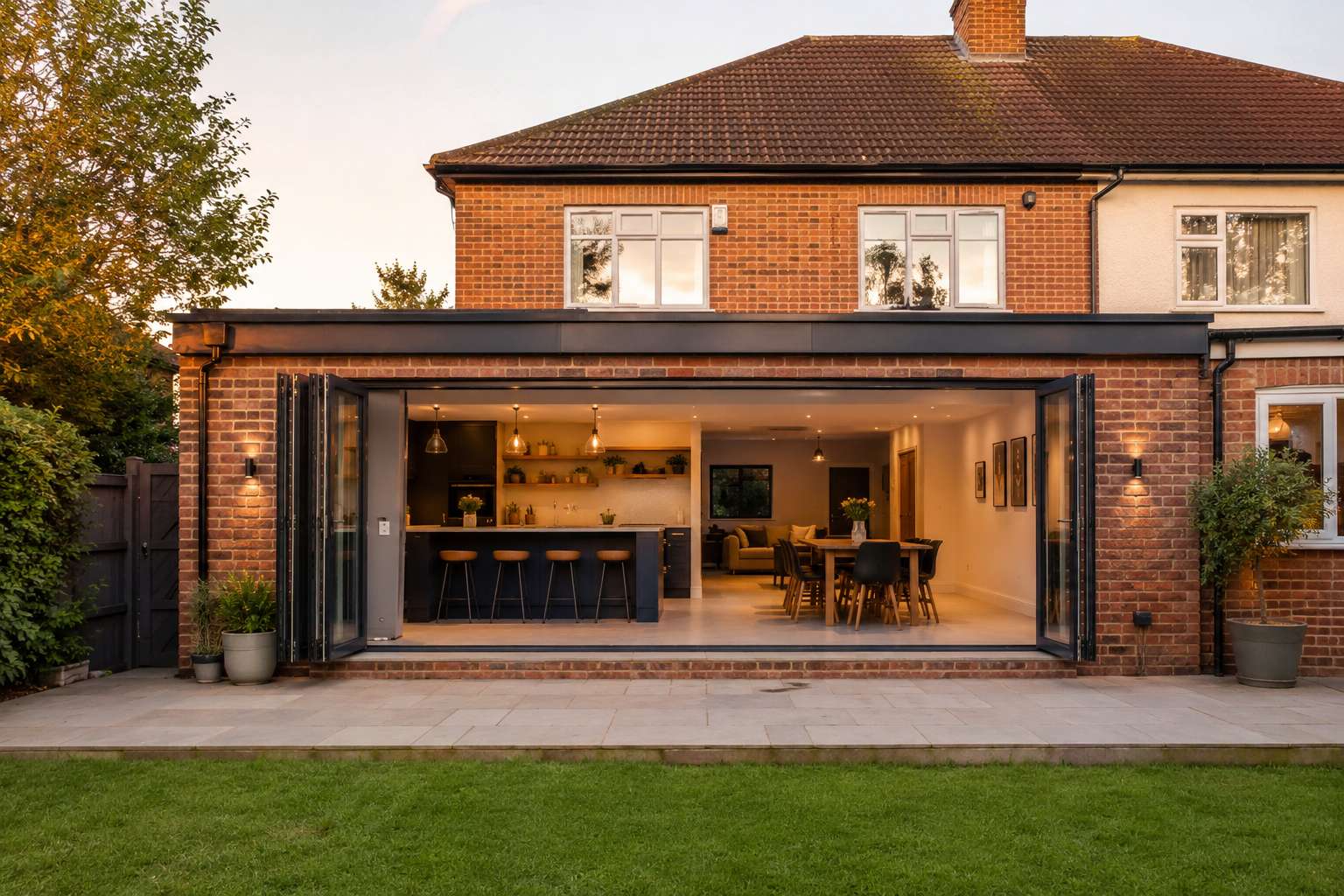
When Do You Need Building Regulations?
Almost all structural building work in England requires Building Regulations approval, regardless of whether the project also needs planning permission. Building Regulations are set out in the Building Act 1984 and the Building Regulations 2010 and cover structural safety, energy efficiency, fire safety, ventilation, drainage, and accessibility. Failing to obtain approval can result in enforcement action, and — critically — the inability to obtain a completion certificate when you come to sell your property.
The following types of work all require Building Regulations approval:
- House extensions of any size, single-storey or two-storey
- Loft conversions creating habitable floor space
- Garage conversions to habitable use
- Structural alterations including removal of load-bearing walls
- New dwellings and self-build properties
- Basement conversions and underpinning works
- Replacement of roof covering (in certain circumstances)
- Installation of new electrical circuits and consumer units
- New or replacement windows and external doors (in some cases)
- Installation of a new boiler or heating system
Yes. Planning permission and Building Regulations are completely separate legal processes. Even if your extension falls within Permitted Development rights and does not need a planning application, it still requires Building Regulations approval. The two systems run in parallel. You cannot receive a completion certificate — required by mortgage lenders and solicitors when you sell — without a valid Building Regulations approval.
Full Plans vs Building Notice: Which Route Is Right for You?
There are two main routes for obtaining Building Regulations approval in England: the Full Plans route and the Building Notice route. Each has distinct advantages and is suited to different project types.
Full Plans Service
The Full Plans route involves submitting a comprehensive set of technical drawings to Leeds Building Control before any work on site begins. Building Control reviews the drawings in detail and issues a formal approval notice, usually within five weeks for most residential projects. Once approved, your builder has the certainty of a checked and approved drawing package to work from. Any technical queries are resolved before work starts, not during construction when changes are disruptive and expensive.
The Full Plans route gives you a permanent, written approval document that can be produced at any point in the future — a significant benefit when selling or remortgaging. It also means that your builder can price accurately from a complete and approved specification.
Building Notice
The Building Notice route is a simpler and faster process. Rather than submitting a full set of drawings for pre-approval, you notify Leeds Building Control that work is about to start and a Building Control Officer visits the site at key stages during construction to check compliance. There is no formal pre-approval of drawings and no written confirmation that the design is acceptable before work begins.
Building Notice is suitable for straightforward projects where there is limited design complexity and a very experienced builder who is confident in working without pre-approved drawings. It is commonly used for like-for-like replacement works or simple internal alterations.
For extensions, loft conversions, and structural alterations, we always recommend the Full Plans route. The design complexity involved — new foundations, structural beams, Part L insulation requirements, and drainage changes — means that pre-approval of drawings gives both you and your builder the certainty you need before a single brick is laid. The additional time required to obtain formal approval is almost always recovered through smoother on-site delivery.
What Our Building Regulations Drawings Include
Our building regulations drawing packages are comprehensive, covering all drawing types required by Leeds Building Control for residential projects. The exact contents depend on your project type, but a typical package includes all of the following.
| Drawing Type | Scale | Purpose |
|---|---|---|
| Location plan | 1:1250 | Identifies the site on Ordnance Survey mapping |
| Site plan | 1:500 | Shows the property boundary, building footprint, access, and drainage |
| Floor plans (existing) | 1:50 | Accurate measured record of the property as it currently stands |
| Floor plans (proposed) | 1:50 | New layout showing all room dimensions, wall construction, and openings |
| Elevations (existing) | 1:50 | All external faces of the existing building |
| Elevations (proposed) | 1:50 | All external faces showing new works, materials, and fenestration |
| Sections through building | 1:50 | Vertical cuts showing floor-to-ceiling heights, roof construction, and junctions |
| Construction details | 1:10 / 1:5 | Eaves, verge, ridge, wall-floor junctions, window reveals, and thermal bridges |
| Insulation / energy details | 1:10 | Wall, roof, and floor build-ups showing U-value compliance with Part L |
| Structural layout | 1:50 | Foundation design, beam and lintel positions, and connection details |
Where your project involves drainage alterations, we also produce drainage layout drawings showing foul and surface water connections to the existing system or soakaway. For loft conversions, we include roof structure drawings showing the existing and proposed roof construction, purlin positions, and any steelwork required.
Part L Energy Efficiency — U-Value Requirements
Part L of the Building Regulations covers the conservation of fuel and power in buildings. For new extensions, loft conversions, and other works that introduce new or replacement building fabric, you must demonstrate that the new elements achieve the required thermal performance (U-value). U-values measure how quickly heat passes through a building element — the lower the number, the better insulated the element.
The current limiting fabric U-values for new extensions and works in England (from the 2021 Building Regulations) are as follows:
| Building Element | Limiting U-Value | Typical Construction to Achieve This |
|---|---|---|
| External walls | 0.18 W/m²K | 100mm blockwork + 100mm mineral wool full-fill cavity |
| Roof | 0.15 W/m²K | 200mm mineral wool between joists + 100mm rigid insulation above |
| Ground floor | 0.18 W/m²K | 150mm EPS rigid insulation below a concrete slab |
| Windows and rooflights | 1.6 W/m²K | Double or triple glazed units with warm-edge spacer bars |
| External doors | 1.8 W/m²K | Thermally broken frame with insulated panel or double glazing |
Our building regulations drawings include fully annotated wall, roof, and floor build-up details confirming how each element achieves the required U-value. Where a standard construction approach cannot meet the limiting U-value in the space available — for example in a shallow warm flat roof — we specify higher-performance insulation products to achieve compliance within the structural depth.
Part L also requires that new and replacement windows do not exceed a total glazed area equivalent to 25% of the new floor area added (for extensions), and that any new or replacement heating systems are appropriately efficient. We advise on all Part L compliance requirements as part of our standard service.
For new dwellings, a full SAP (Standard Assessment Procedure) energy calculation is required to demonstrate compliance with Part L. YPDS works with accredited SAP assessors and coordinates this as part of our new build service. For extensions and conversions, simplified compliance using the limiting U-values above is generally sufficient.
Our Fees for Building Regulations Drawings
We charge a fixed fee for all building regulations drawing packages. The fee is agreed before we start and covers all drawings, structural coordination, the building control submission, and management of any technical queries from the Building Control Officer. There are no hourly rates and no hidden extras.
| Project Type | Fee (from) | Typical Package Contents |
|---|---|---|
| Structural alterations (internal) | From £750 | Structural layout, beam and lintel schedule, construction details |
| Single-storey extension | From £950 | Full drawings package including floor plans, elevations, sections, and construction details |
| Double-storey extension | From £1,200 | Full drawings package for both floors including all elevations, sections, and structural details |
| Loft conversion | From £1,100 | Roof structure drawings, floor plans, sections, fire safety details, and stair design |
| New build dwelling | From £1,800+ | Full drawings package for building control, coordinated with planning drawings |
The Leeds Building Control application fee is payable directly to Leeds City Council and is separate from our architectural fee. For a single-storey extension, the council’s charge fee is typically in the range of £400–£800 depending on the floor area being added. We confirm the exact council fee at the start of your project.
For projects that require both planning permission drawings and building regulations drawings, we offer a combined package at a reduced overall fee compared with commissioning the two stages separately.
Our Building Regulations Process
Free Consultation
We discuss your project, confirm what Building Regulations approval is needed, and provide a fixed-fee quote at no charge.
Measured Survey
We carry out a full measured survey of your property to produce accurate existing drawings as the foundation for all technical work.
Full Plans Submission
We prepare the complete technical drawings package and submit directly to Leeds Building Control, managing all correspondence.
BC Approval
Leeds Building Control issues a formal approval notice, typically within five weeks, giving your builder the green light to start on site.
Construction Support
We support you and your builder through Building Control site inspections to practical completion and final sign-off.
Why Choose YPDS for Your Building Regulations Drawings?
Coordinated with Your Planning Drawings
When we have also produced your planning drawings, the building regulations package is produced from the same base survey and CAD model. This eliminates discrepancies between the two sets and saves you money on the combined instruction.
Structural Engineer Liaison
We work with trusted local structural engineers and coordinate their calculations and specifications directly into our drawing package. You receive a single, fully coordinated set of drawings, not separate documents that need reconciling on site.
Fast Turnaround
We typically complete building regulations drawing packages within 3–4 weeks of instruction, meaning you are not waiting months before your builder can get started. We are clear about timescales from day one.
Leeds Building Control Experience
We submit regularly to Leeds Building Control and understand the standard conditions, typical queries, and the technical expectations of the department. Our submissions are thorough, reducing the likelihood of queries that delay your start on site.
Frequently Asked Questions About Building Regulations
Free Initial Consultation
Let’s discuss your project and what Building Regulations approval you need. Call 0113 418 0721, email info@ypds.co.uk, or use our enquiry form.
Book a ConsultationReady to get your building regulations sorted?
Book your free initial consultation and we’ll confirm exactly what approval you need, prepare a comprehensive drawings package, and manage the full submission to Leeds Building Control — all at a fixed fee.
Book a ConsultationRelated Services
House Extensions Leeds
Expert architectural design for single-storey, double-storey, side return, and wrap-around extensions across Leeds and West Yorkshire, including all planning and building regulations submissions.
Loft Conversions Leeds
Dormer, hip-to-gable, Velux, and mansard loft conversions designed and drawn for planning and building regulations approval — with structural engineer coordination included.
Planning Permission Leeds
Full householder planning applications, Prior Approval, Certificates of Lawful Development, and pre-application advice managed directly with Leeds City Council.
What our clients say
Over 25 five-star reviews on Google
Outstanding service, great ideas and vision. We are embarking on our 4th renovation project and this time have a lot of space to work with. Rob and the team have been fantastic throughout.
From start to finish, Rob has kept us informed about our planning application. He provided detailed plans based on what we discussed with him which required very little changes. Excellent professional service throughout.
Rob was fantastic start to finish on our recent project. Very knowledgeable and his completed plans and 3D views are brilliant. Took a lot of the stress out of applying for planning permission and was approved first time. Very easy to contact.
We've used Rob for 2 different projects now. He helped us come up with a layout that worked for what our family needed, then drew up the plans and submitted the application for planning. Fantastic service both times.
Rob offers an amazing service. Really good communication, really smart looking plans, and struck a great balance between listening to what we wanted and helping us see what else was possible. Also made planning very straightforward. Thanks Rob!
Rob has been amazing. His ideas and creativity are just what we were looking for. Even when we changed our minds and wanted extra, Rob was happy to accommodate this. I would 100% recommend and will certainly use him again in the future. Absolute star.
This is the second time that we have used Yorkshire Property Designs and have always found Rob to be more than accommodating, taking time to fully understand our ideas before drawing up plans. He is always approachable and transparent.
Rob is very professional and always made sure I understood the processes and design decisions he made. Very pleased with the drawings and how he conducted the survey, as well as all the extra help and information he gave along the way.
Areas We Cover
We prepare building regulations drawings for homeowners right across North and West Leeds. See what we do in your area:
Building Regulations Drawings in Horsforth
Building regulations drawings for extensions and loft conversions across Horsforth and LS18.
Building Regulations Drawings in Adel
Full plans packages for Adel properties, including stone-built and interwar housing.
Building Regulations Drawings in Cookridge
Construction drawings and structural detailing for Cookridge and LS16.
Building Regulations Drawings in Moortown
Building control submissions for Moortown, Alwoodley and LS17.
Building Regulations Drawings in Rawdon
Building regulations approval for Rawdon, Yeadon and LS19.
Building Regulations Drawings in Pudsey & Farsley
Extension and loft plans meeting building control across Pudsey, Farsley and LS28.