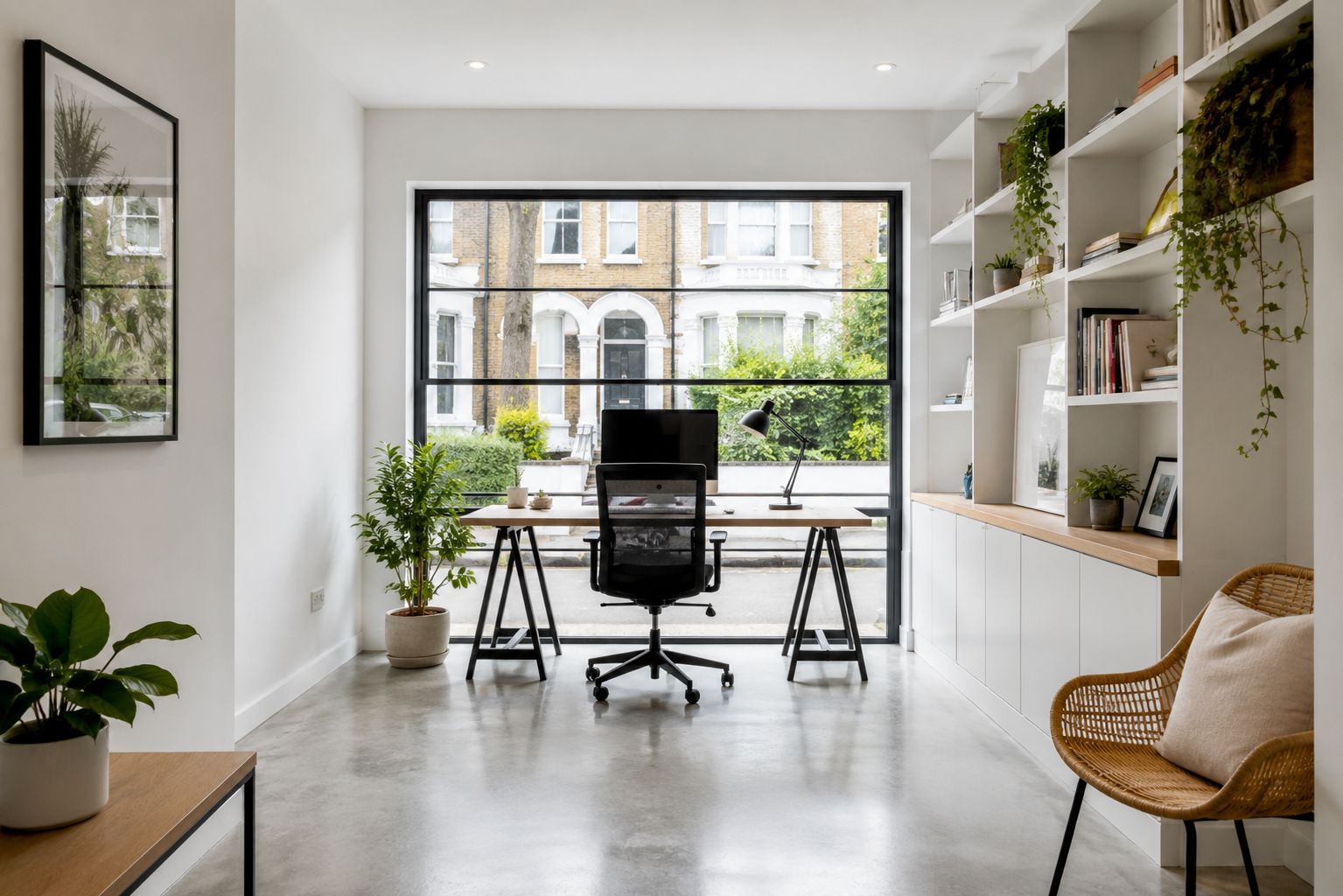
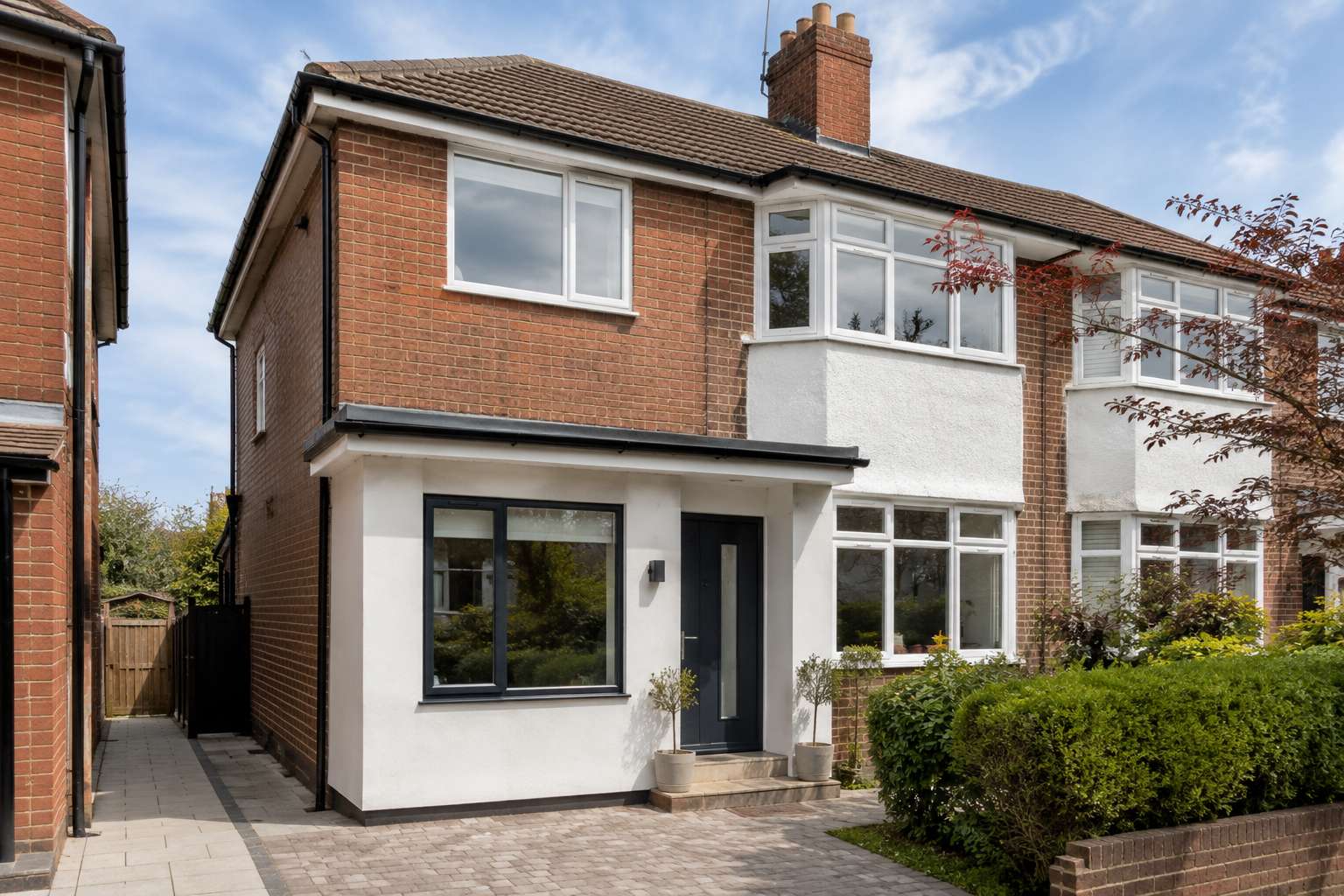
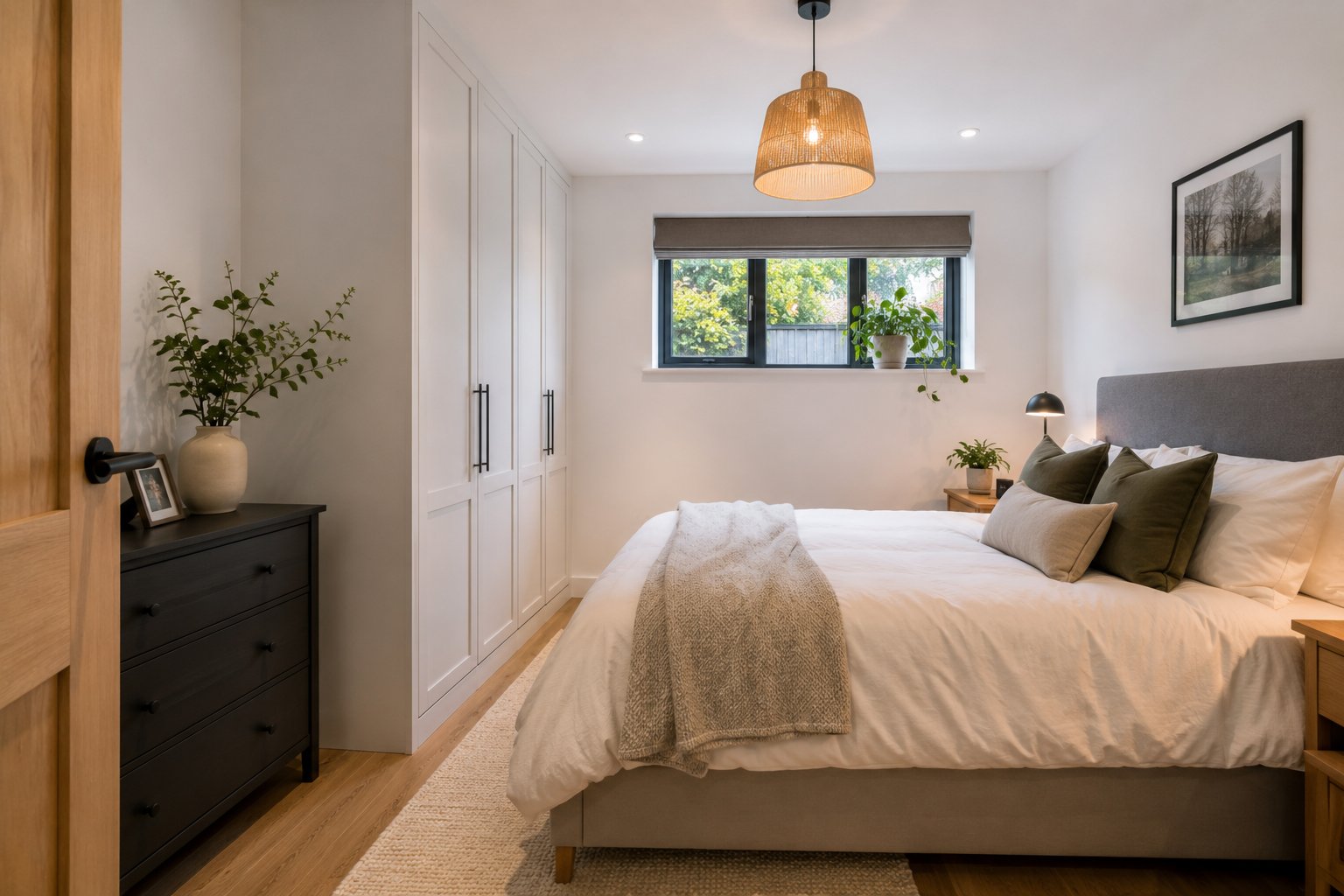
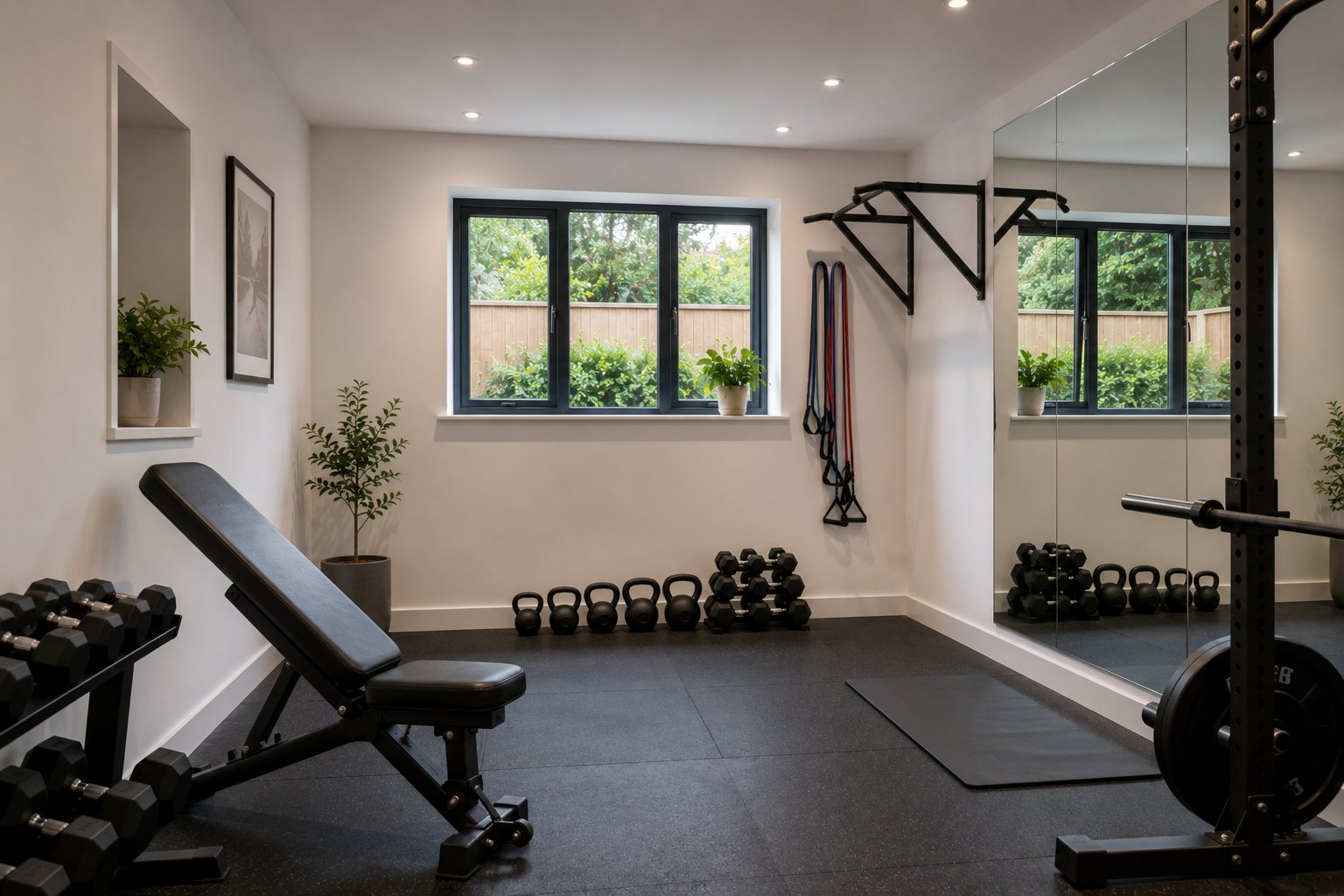
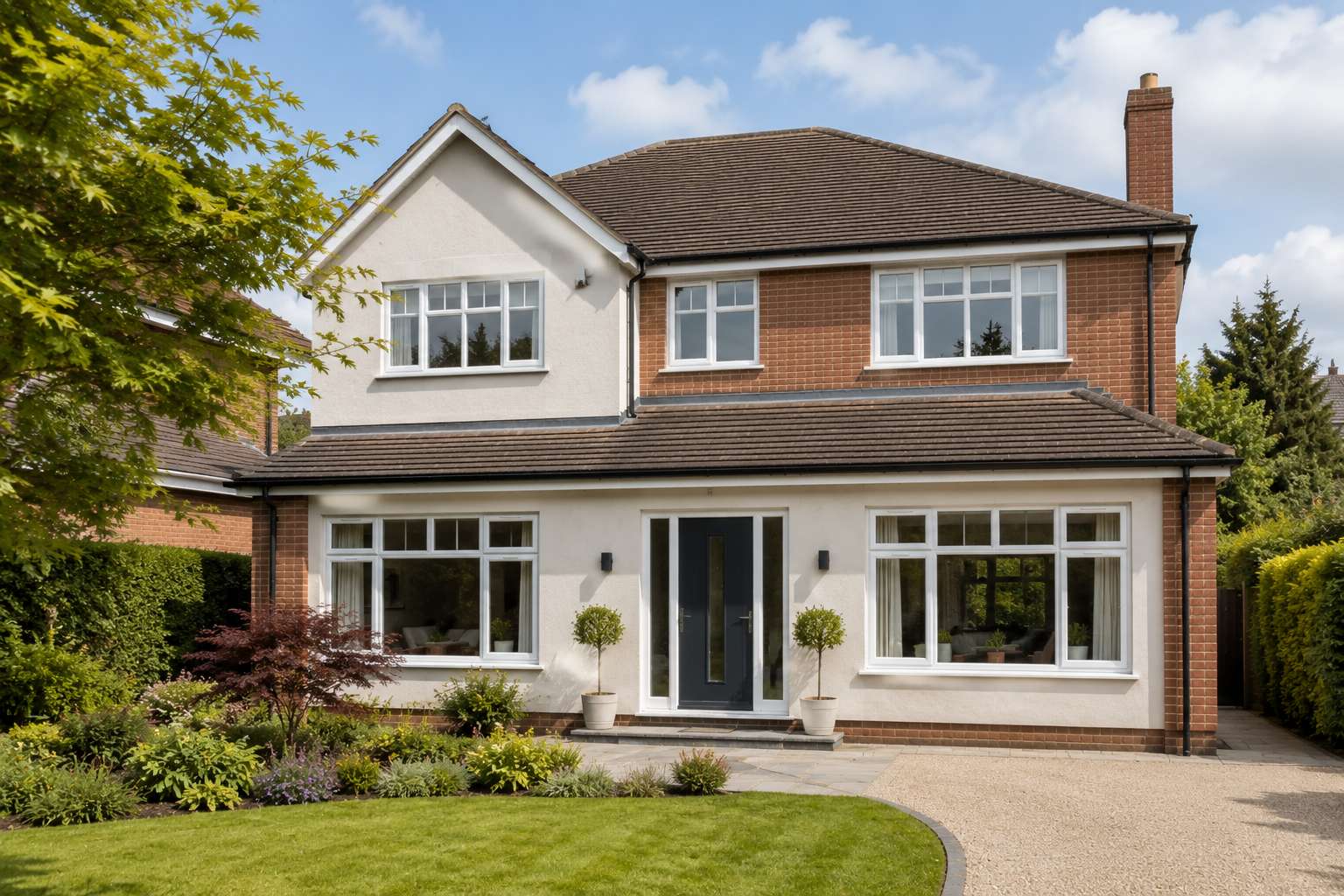
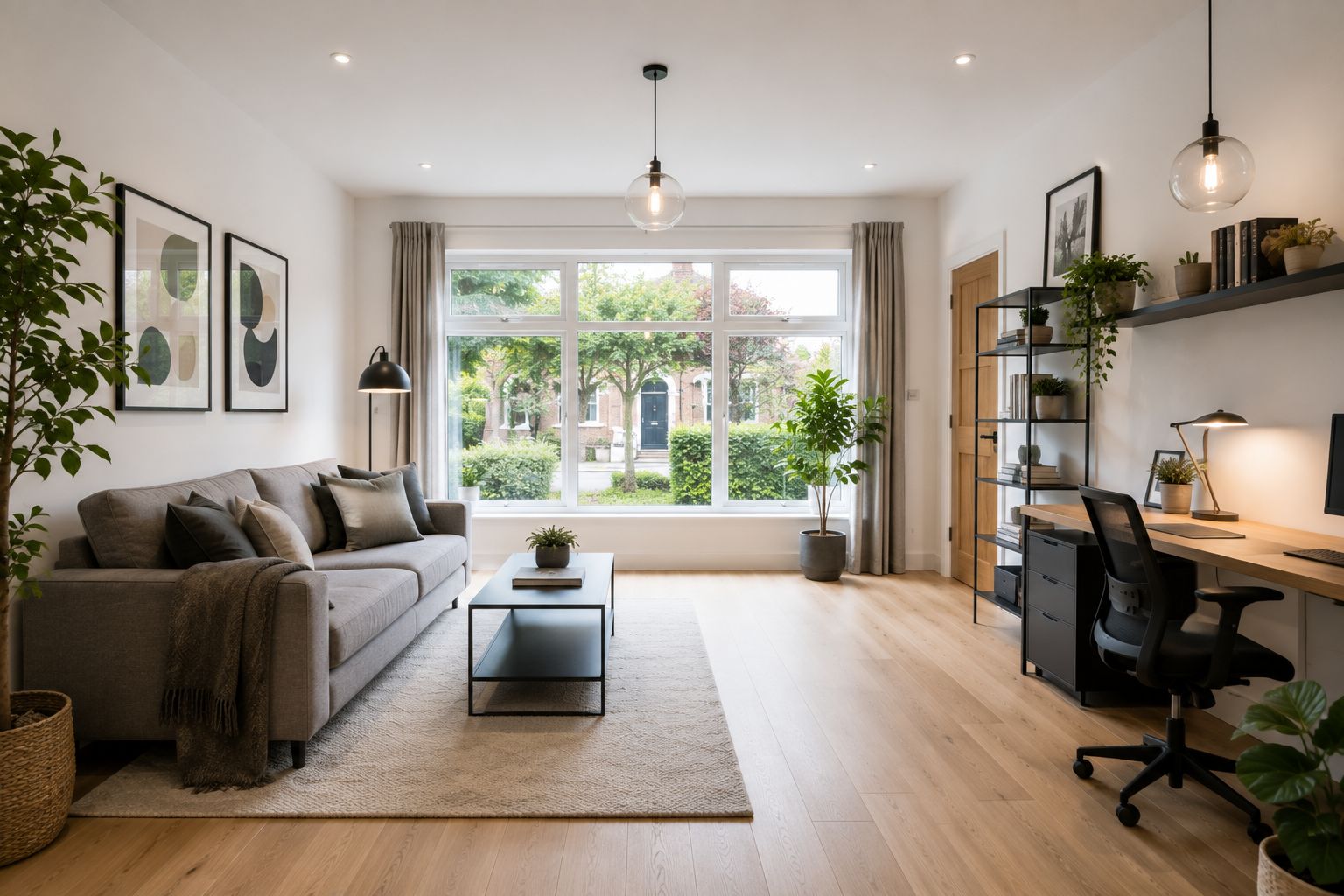
Converting a garage into a habitable room is one of the most practical home improvements available to Leeds homeowners. It adds usable floor space without reducing your garden, typically costs significantly less to build than an extension, and in most cases does not require planning permission. The key requirements are on the technical side: the conversion must meet current Building Regulations standards for thermal insulation, structural integrity, ventilation, and fire safety. Getting that right from the start — with a proper set of drawings — determines whether the build goes smoothly and whether you can obtain a completion certificate when the work is done.
YPDS prepares garage conversion drawings for homeowners across Leeds and West Yorkshire. We cover integral garages (built into the house), attached garages (connected but with a separate structure), and detached garages (freestanding in the garden). Each type presents slightly different design and building regulations challenges, and our drawings address all of them. This page covers what is involved, what the regulations require, and how our service works.
If you have been considering a garage conversion for a while but are not sure where to start, the most useful first step is a conversation with an architect. Most conversions in Leeds are more straightforward than homeowners assume, and the planning and building regulations position can usually be confirmed within a few minutes of discussion.
Free Garage Conversion Consultation
Call 0113 418 0721, email hello@ypds.co.uk, or send us an enquiry online. We will confirm your planning position and advise on the building regulations requirements at no cost.
Types of Garage Conversion We Design
Integral Garage Conversion
An integral garage is built into the footprint of the house, typically accessed from a hallway or directly from the house interior. Integral garage conversions are the most common type in Leeds, particularly in 1950s–1980s semi-detached properties across Horsforth, Cookridge, Rawdon, and the post-war suburbs to the north and northwest of the city. Because the structure already exists and the roof is shared with the main house, the conversion is mainly about upgrading the thermal performance of the floor, walls, and door opening, and creating the right internal connection to the rest of the house.
Attached Garage Conversion
An attached garage sits alongside the house with its own roof but shares at least one wall with the main dwelling. The structural considerations are slightly different — the shared wall usually needs fire-proofing to Part B standard and the ceiling and walls need insulating to meet Part L. The door opening between garage and house, and the question of how the converted room connects to the rest of the house, are the main design decisions.
Detached Garage Conversion
A detached garage is a freestanding structure in the garden with no shared walls with the main house. Detached garage conversions are common where the structure is large enough to accommodate a useful room — a home office, studio, gym, or annex. Detached conversions require careful attention to drainage (particularly if adding a WC or kitchenette), external insulation to all walls and the roof, and the routing of services from the main house. Where a detached conversion is to be used as a self-contained annexe, planning permission is usually required regardless of size.
Do You Need Planning Permission for a Garage Conversion in Leeds?
In most cases, a garage conversion within the existing footprint of the garage — without extending the structure — does not require planning permission. This is because the garage structure already exists; converting the interior to a different use is not, in most situations, a development that requires consent under the Town and Country Planning Acts.
However, there are situations where planning permission is required for a garage conversion:
- You are changing the use of a detached garage to a separate dwelling or self-contained annexe — this is a material change of use and requires planning permission.
- The garage was built under a planning condition that it must remain as a garage — this is common on properties where the planning consent required a minimum number of parking spaces. Check your original planning documents.
- You are extending the garage as part of the conversion — any extension to the existing structure requires planning permission or Permitted Development assessment.
- You are converting a listed building’s garage — works to a listed building always require Listed Building Consent and usually planning permission.
We confirm your specific planning position at the free initial consultation. Where there is any doubt, we recommend applying for a Certificate of Lawful Development to obtain formal written confirmation from Leeds City Council. Our planning permission service covers LDC applications as part of our standard offering.
| Conversion Type | Planning Required? | Notes |
|---|---|---|
| Integral garage (no extension) | Usually not | Check for parking conditions on original permission |
| Attached garage (no extension) | Usually not | Check for planning conditions |
| Detached garage (ancillary use) | Usually not | Must remain ancillary to the main dwelling |
| Detached garage as separate dwelling | Yes | Material change of use |
| Any garage – extending the footprint | Possibly | Assess as a house extension |
Building Regulations for Garage Conversions
All garage conversions require Building Regulations approval. Even if no planning permission is needed, a building notice or full plans application must be made to Leeds Building Control before the conversion starts. The regulations cover several key areas:
Thermal Insulation — Part L
This is the most technically demanding element of a garage conversion. Garages are not thermally insulated to the standard required for habitable rooms, and the conversion must bring the floor, walls, and ceiling/roof up to current standards. For a concrete floor, this typically means adding 75–100mm of rigid insulation beneath a new screed or floor board deck. For masonry walls, insulated dry-lining is the most practical approach. The roof (or ceiling into roof void) needs insulation to achieve a U-value of 0.18 W/m²K or better. We specify all insulation thicknesses and products in our building regulations drawings.
Structural Integrity — Part A
The existing garage structure must be structurally adequate to support the loads imposed by a habitable room. This is particularly relevant for the floor slab (which may not be designed to carry furniture and occupancy loads) and for any lintels over the former garage door opening if it is being infilled. Our drawings include structural information, and we coordinate with a structural engineer where specialist input is needed.
Fire Safety — Part B
Where a garage conversion connects to the main house, the junction must be fire-protected. This typically means a 30-minute fire-resistant door between the garage and the house interior, with fire-resistant boarding to the shared wall and ceiling. This requirement applies to integral and attached garages; the specific details depend on the relationship between the garage and the escape route from the house.
Ventilation — Part F
A converted garage used as a habitable room requires background ventilation (trickle vents in any new windows) and rapid ventilation (openable windows providing a minimum area). If the conversion includes a bathroom or WC, mechanical extract ventilation at a minimum of 15 litres per second is required. Our drawings specify all ventilation requirements.
Drainage — Part H
Where a garage conversion includes a bathroom, WC, or kitchen/kitchenette, drainage connections to the existing foul drainage system must be designed. For integral garages, this is usually straightforward. For detached garages where there is no existing drainage connection, a new underground drain run to the main drainage is required, which adds cost and complexity.
Electrical Safety — Part P
All electrical work in a garage conversion must be carried out by a qualified electrician registered under a competent person scheme (such as NICEIC or NAPIT), or be inspected and certified by an independent inspector. Our drawings indicate the general lighting and power requirements; electrical installation design is the contractor’s responsibility.
Get Your Garage Conversion Drawings
We prepare full planning and building regulations drawings packages for garage conversions across Leeds. Call 0113 418 0721, email hello@ypds.co.uk, or complete our enquiry form.
What Is Included in Our Garage Conversion Drawings Package
- Existing floor plan and elevations — accurate drawings of the garage as it stands
- Proposed floor plan — showing the new room layout, door positions, window positions
- Proposed elevations — external views showing any new window or door openings and infill of former garage door
- Building regulations drawings — floor insulation detail, wall insulation detail, roof/ceiling insulation detail, all to current Part L standards
- Structural information — floor slab assessment, lintel details for garage door infill, any beam requirements
- Fire strategy — fire door positions, fire-resistant boarding specification, smoke detection requirements
- Ventilation schedule — window ventilation areas, extract fan specification where applicable
- Drainage layout — where bathroom or WC is included
- Building control submission — we submit and manage the full plans application to Leeds Building Control
Our Garage Conversion Design Process
Stage 1 — Free Consultation
We discuss what you want to do with the space, confirm your planning position, and advise on the building regulations requirements. We provide a fixed-price fee proposal. No charge, no obligation.
Stage 2 — Measured Survey
We visit your property to survey the existing garage: dimensions, structure, existing window and door positions, relationship to the main house, and drainage arrangements. The survey provides the data needed to produce accurate drawings.
Stage 3 — Design Drawings
We produce the proposed layout for the converted space: room arrangement, new window and door positions, infill of the existing garage door opening, and connection to the main house. Where there are design options — for example, whether to add a window to the side wall or rely on light through a new front window — we present these and discuss the implications.
Stage 4 — Building Regulations Package
We prepare the full technical drawings package for building control submission. This covers all the elements described above: insulation, structure, fire strategy, ventilation, and drainage. We submit to Leeds Building Control and manage the full plans approval process, including responding to any technical queries from the inspector.
Why Choose YPDS for Your Garage Conversion?
- Part L specialists — the thermal performance requirements of a garage conversion are where most drawings packages fall short. We get the insulation specification right from the outset, avoiding costly amendments when the building inspector raises queries.
- Fixed fees — we provide a written fixed-price quote before starting. Garage conversion drawings packages start from £900.
- Fast turnaround — most garage conversion drawings packages are completed within 3–4 weeks of instruction. Straightforward projects are sometimes faster.
- Building control managed — we submit to Leeds Building Control and deal with any technical queries so you do not have to.
- Local knowledge — we know the Leeds Building Control inspectors and their requirements, which means smoother approval on first submission.
If you are considering a garage conversion alongside a wider project — for example, combining it with a rear extension or reconfiguring internal rooms — our full residential architectural service can cover the whole scope as a single coordinated package.
Start Your Garage Conversion
Call 0113 418 0721, email hello@ypds.co.uk, or complete our enquiry form. Free initial consultation, fixed-price drawings packages from £900.
Frequently Asked Questions About Garage Conversions in Leeds
How much does a garage conversion cost in Leeds?
Build costs for a garage conversion in Leeds typically range from £8,000 to £25,000 depending on the size of the garage, the level of finish, and whether a bathroom is included. A simple single garage conversion to a bedroom or home office is at the lower end; a double garage with en-suite bathroom and high specification finishes is at the upper end. Our architectural and building regulations drawings packages start from £900.
Does a garage conversion add value?
A garage conversion that creates a useful additional habitable room — bedroom, home office, playroom — typically adds value, particularly in areas of Leeds where an extra bedroom commands a premium. However, removing a working garage can reduce value if off-street parking is scarce on your street. We discuss this at the initial consultation as part of the feasibility assessment.
Can I convert my garage without losing my parking space?
Some clients with a double garage convert half of it to habitable space and retain a single parking bay. Others find alternative parking solutions in the driveway or on street. Where the original planning permission for the house required a garage as a condition, converting it may technically breach that condition and require a separate planning application to vary or discharge the condition. We check this as part of the initial planning assessment.
How long does a garage conversion take?
The build typically takes 4–8 weeks on site. Our drawings package takes 3–4 weeks to produce after instruction. Building control approval typically takes 4–6 weeks. In total, allow 10–18 weeks from initial instruction to completion of the build, depending on contractor availability.
Can I build a bedroom above my garage at the same time?
Yes. If you are building over an existing garage to create an additional room above, this is a form of extension and is assessed under the householder extension rules for planning and building regulations. We can combine both elements — the garage conversion below and the new room above — into a single coordinated drawings package. See our house extensions page for more information on over-structure additions.
Do I need an architect for a garage conversion?
You do not legally need to engage an architect or architectural technologist for a garage conversion, but you do need building regulations drawings that satisfy Leeds Building Control — and these must be technically accurate and comprehensive. Many builders produce their own drawings, but these often lack the detail needed for full plans approval, leading to conditions and queries that delay the build. A proper drawings package produced by an experienced practice is a worthwhile investment.
What insulation do I need for a garage conversion?
The insulation specification depends on the construction of the existing garage. For a concrete floor slab, 75–100mm of rigid insulation beneath a new screed or floor board is typical. For masonry walls, insulated dry-lining (plasterboard bonded to rigid insulation, or a timber stud wall with mineral wool fill) is the most practical solution. The ceiling or roof needs insulation to achieve a U-value of 0.18 W/m²K. We specify the exact products and thicknesses in our building regulations drawings based on the existing construction and the target U-values.
Can I use a garage conversion as a home office?
Yes. A home office is a permitted use within a domestic dwelling and does not require any additional planning consent beyond what applies to the garage conversion generally. If the home office will be used for a business that generates visitors or deliveries materially different from normal residential use, planning advice may be worthwhile, but for typical home working this is not an issue.
What is the difference between a garage conversion and a garden room?
A garage conversion uses an existing structure; a garden room is a new-build structure in the garden. Garden rooms are typically timber-framed structures built to a lower thermal standard than a habitable room in the main house, and they often fall under Permitted Development as an outbuilding. A garage conversion, by contrast, must meet full Building Regulations habitability standards. Both can be used as home offices, studios, or ancillary living space, but the planning and building regulations position is different for each.
Will I need to move plumbing or electrics in my garage conversion?
Electrical work in the garage will need to be inspected and certified as part of the conversion, even if the existing circuits are adequate. Where a consumer unit is located in the garage, this will need to be assessed and potentially relocated. Plumbing is only required if you are adding a WC, bathroom, or wet room — but where drainage is not already present, connecting to the existing drainage system adds cost and may require digging up the floor or laying an underground drain run. We identify these requirements at the survey stage and include them in the drawings and specification.
Book Your Free Consultation
Talk to a YPDS architect about your garage conversion at no cost. Call 0113 418 0721, email hello@ypds.co.uk, or complete our online enquiry form.
Related Services
House Extensions Leeds — If you want to add space beyond what a garage conversion provides, a single-storey or double-storey extension is the natural next step. We design extensions of all types across Leeds.
Loft Conversions Leeds — Convert your roof space into a bedroom, bathroom, or home office. An alternative to a garage conversion when you want to add space without losing parking or garden area.
Planning Permission Leeds — We manage householder applications and Certificates of Lawful Development for all residential projects, including garage conversions where planning consent is required.
Building Regulations Drawings Leeds — Full technical drawing packages for building control submission on all residential projects, including comprehensive thermal insulation details to current Part L standards.
Residential Architects Leeds — Our full residential architectural service covers all project types from a single coordinated package, including combined extension and conversion schemes.
Related reading: Thinking of combining a garage conversion with a house extension? See our House Extension Costs Leeds 2026 guide for budgeting guidance.
What our clients say
25 five-star reviews on Google
Rob was fantastic from start to finish. The drawings were exactly what we needed and the planning went through first time. Would highly recommend.
Read moreProfessional, knowledgeable and great value. Rob guided us through the whole process and we got planning permission approved with no issues.
Read moreExcellent service. Very responsive and the quality of the drawings was superb. Our loft conversion went through planning without any problems.
Read moreReally impressed with the whole experience. Rob explained everything clearly, the drawings were perfect and planning was approved without any issues at all.
Read moreCouldn't fault the service. Very professional, great communication throughout and our extension plans were exactly what we envisioned. Highly recommend.
Read moreRob made the whole planning process stress-free. His knowledge of what Leeds City Council require is excellent. Planning approved first time — brilliant service.
Read moreRob was fantastic from start to finish. The drawings were exactly what we needed and the planning went through first time. Would highly recommend.
Read moreProfessional, knowledgeable and great value. Rob guided us through the whole process and we got planning permission approved with no issues.
Read moreExcellent service. Very responsive and the quality of the drawings was superb. Our loft conversion went through planning without any problems.
Read moreReally impressed with the whole experience. Rob explained everything clearly, the drawings were perfect and planning was approved without any issues at all.
Read moreCouldn't fault the service. Very professional, great communication throughout and our extension plans were exactly what we envisioned. Highly recommend.
Read moreRob made the whole planning process stress-free. His knowledge of what Leeds City Council require is excellent. Planning approved first time — brilliant service.
Read more